
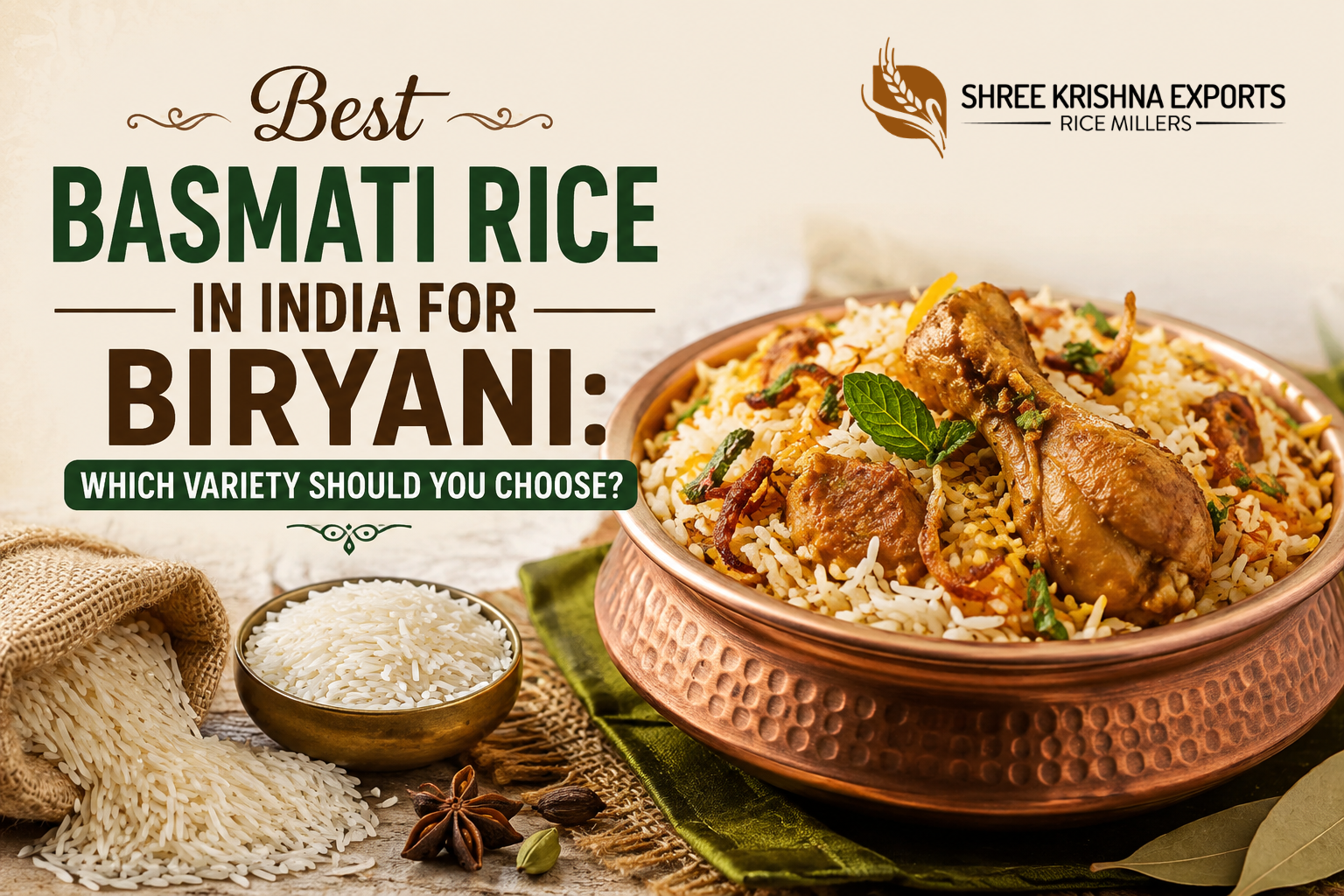
Not only do spices play an important role in the preparation of biryani, but also the choice of rice. Good Basmati rice should have the following properties: Long and slim grain, unique smell, elongation during cooking, and easy to differentiate as separate grains.
Many types of Basmati rice exist in India, so it is very hard to choose the best one. If you are a housewife, hotelier, caterer, or anything else related to the food business looking for a good Basmati Rice Supplier, like Shree Krishna Exports, then knowledge about different types can prove to be useful to you.
What Makes Basmati Rice Ideal for Biryani?
Each variety of rice does not give the same results. Some of the key features that should be present for making high-quality biryani are as follows:
- Long grains: The grains should have long lengths, which add beauty to biryani.
- Elongation: The grains should become longer but should not become thick when cooked.
- Aroma: This feature helps add flavor to biryani.
- Non-sticky grains: They help maintain the fluffiness of grains.
- Cooking ability: The grains must have the strength to resist dum cooking.
1121 Basmati Rice – A Premium Choice for Biryani
1121 Basmati Rice from Shree Krishna Exports is widely preferred for premium biryani because of its exceptional grain length and impressive elongation after cooking. Its long, elegant grains give biryani a visually appealing and luxurious appearance.
This variety is suitable for:
- Premium restaurant biryani
- Wedding and event catering
- Export-oriented food businesses
- High-end retail packaging
For buyers focused on presentation, aroma, and grain length, 1121 Basmati from the Largest Basmati Rice Exporters is often considered one of the best options.
1509 Basmati Rice – Quality with Good Value
1509 Basmati Rice is another popular choice for biryani preparation. It offers long grains, a pleasant aroma, and good cooking performance while providing an effective balance between quality and cost.
It can be a practical choice for:
- Restaurants serving biryani regularly
- Large-scale catering operations
- Foodservice businesses
- Bulk rice procurement
The right grade and processing quality are important when selecting this variety from a Basmati Rice Supplier, especially for businesses requiring consistent results across large batches.
How to Choose the Right Variety?
Before choosing the rice to make biryani, you should take into account the following:
1. Budget: High-end varieties of long-grain rice might be more visually pleasing, but others might give better value for large-scale production.
2. Uniformity of Rice Grains: It is important that the grains are uniform in size to ensure even cooking and good appearance.
3. Aroma and Ageing: Basmati that is well-aged will improve aroma and cooking properties.
Final Thoughts
No one variety exists that meets all the demands of biryani. The 1121 Basmati Rice variety should be chosen when you are looking for superior presentation and outstanding grain length, whereas 1509 Basmati Rice provides a good combination of quality and price. Traditional varieties provide a great option for those who require authentic flavor and aroma.
In my opinion, you need to select the largest basmati rice exporters like Shree Krishna Exports, the right variety according to your recipe, budget, and expectations from quality, and work with a reliable Basmati rice supplier.
Frequently Asked Questions:
1. Which is the best type of Basmati Rice to prepare biryani?
Basmati Rice 1121 is recommended for biryani due to its long-grain characteristic and its aroma and elongation.
2. Is 1509 Basmati Rice suitable for biryani preparation?
Yes, 1509 Basmati Rice will suit well for biryani preparations as far as grain length, aroma, and cooking properties are concerned, and also caterers can use this variety.
3. Why should I use old Basmati Rice for biryani preparation?
Old Basmati Rice offers better aroma, grain separation, and cooking properties.
4. How can I identify a good Basmati Rice supplier?
A good Basmati Rice supplier would be one who provides good grain quality, good processing, proper packaging, different varieties, and good bulk supply.