
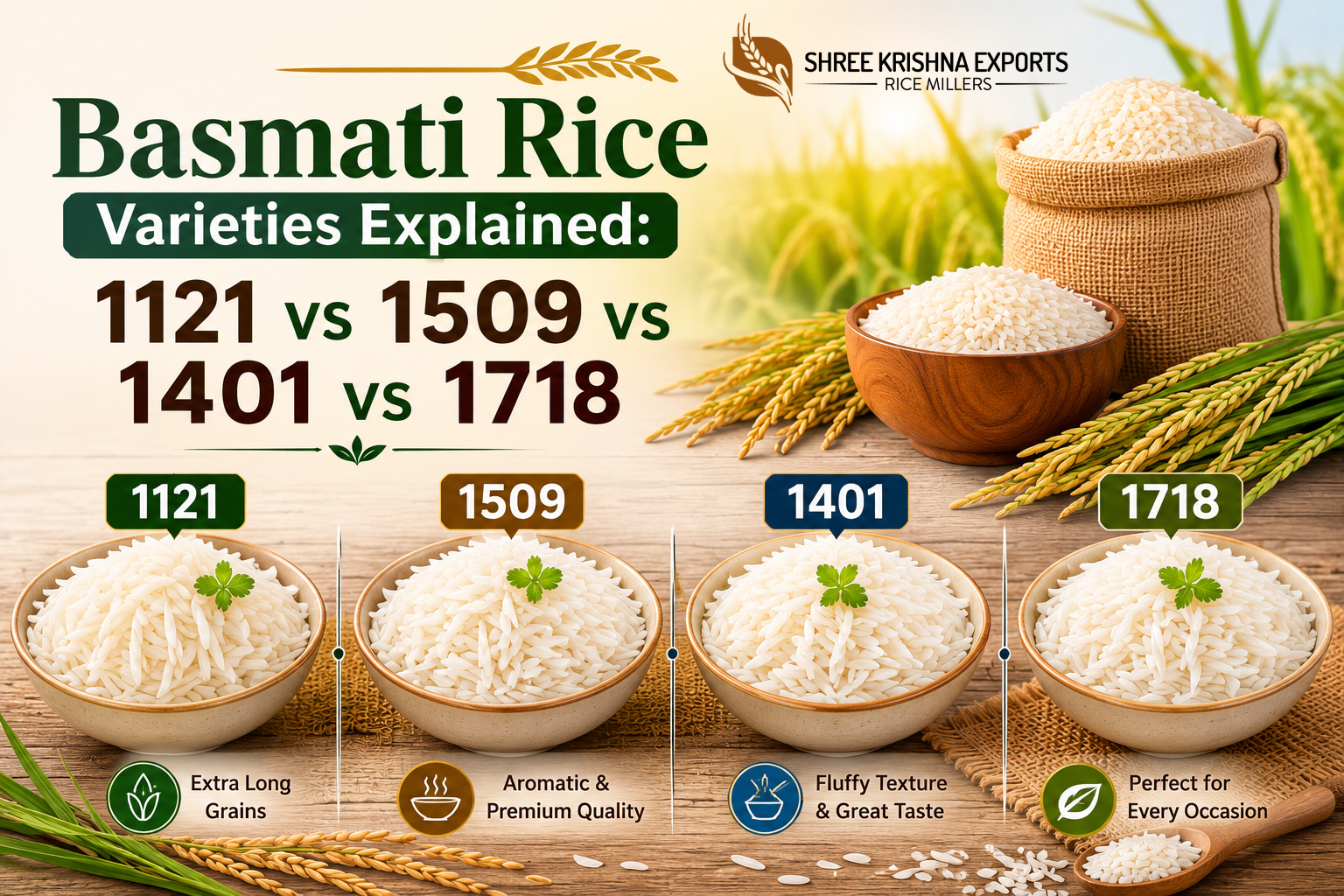
Basmati rice is renowned worldwide due to its length, aroma, and superior cookability attributes. However, there is a difference between the various strains of basmati. Each strain comes with unique qualities that qualify it for use with particular styles of cooking and exporting to international markets. Regardless of whether you are a buyer, retailer, wholesaler, or food manufacturer, understanding the differences between the different strains of basmati rice will enable you to make informed choices.
As your leading Basmati rice manufacturer in India, Shree Krishna Exports presents you with top-of-the-line strains of rice meeting international standards.
Understanding Different Basmati Rice Varieties
Several varieties of Indian basmati rice are available, including 1121, 1509, 1401, and 1718. There is a slight difference in grain length, aroma, cooking quality, yield, and cost between these basmati rice varieties.
1. 1121 Basmati Rice – The Premium Choice
1121 is considered one of the finest & longest basmati rice varieties available today. It is highly preferred across the Middle East, Europe, the USA & many Asian countries because of its impressive grain elongation after cooking.
The variety is available in multiple processing options, which include:
- 1121 sella basmati rice
- 1121 white basmati rice
- 1121 golden sella basmati rice
- 1121 steam basmati rice
Best United for:
- Premium restaurants
- Luxury hotels
- Biryani preparation
- International retail markets
- International retail market
- Export businesses
2. 1509 Basmati Rice – Early Harvest With Excellent Value
1509 is one of the earliest maturing basmati varieties & has become increasingly popular because it combines excellent quality with competitive pricing. The available options include:
- 1509 Sella Basmati Rice
- 1509 White Basmati Rice
- 1509 Golden Sella Basmati Rice
- 1509 Steam Basmati Rice
Compared to 1121 & 1509 has slightly shorter grains but still delivers excellent elongation, pleasant aroma & consistent cooking performance. Its affordability makes it an excellent choice for bulk buyers & commercial food businesses.
Best suited for:
- Catering services
- Daily household consumptions
- Food processing industries
- Bulk export orders
3. 1401 Basmati Rice – Balanced Quality & Affordability
1401 basmati rice is widely appreciated for offering an excellent balance between quality & price. It provides good grain length, pleasant aroma & reliable cooking characteristics, which makes it suitable for both domestic & international markets.
Key Features:
- Good grain elongation
- Mild natural aroma
- Soft texture after cooking
- Affordable pricing
- Suitable for everyday consumption
1401 is often preferred by importers looking for premium-quality rice within a moderate budget.
4. 1718 Basmati Rice – Modern Variety for Growing Demand
1718 is a relatively newer Basmati variety developed to offer improved productivity while maintaining the essential qualities expected from authentic Basmati rice. The advantages of 1718:
- Long slender grains
- Good cooking expansion
- Pleasant aroma
- Consistent grain quality
- Suitable for multiple cuisines
Its competitive pricing and dependable quality have made it increasingly popular in international export markets.
Comparison Of Popular Basmati Rice Varieties:
| Variety | 1121 Basmati Rice | 1509 Basmati Rice | 1401 Basmati Rice | 1718 Basmati Rice |
| Grain length | Extra long | Long | Long | Long slender |
| Aroma | Strong | Good | Mild | Pleasant |
| Cooking Performance | High elongation | Excellent value | Soft & fluffy | Consistent performance |
| Best for | Premium exports, hotels & biryani | Bulk buyers, catering & retail | Everyday use & commercial supply | Export & wholesale markets |
How to Choose the Right Basmati Rice Variety
Choosing the appropriate type relies on your business needs.
- Select 1121 for an elite look, enhanced grain length, and upscale market placement.
- Choose 1509 when you need premium rice at a lower cost for bulk orders.
- Choose 1401 if you seek reliable quality appropriate for everyday use and commercial distribution.
- Select 1718 when you’re looking for a contemporary variety that provides a mix of quality, yield, and market competitiveness.
Where to Buy From Shree Krishna Export?
As experienced Basmati rice manufacturers in India, we at Shree Krishna Export focus on delivering consistent quality for domestic and international markets.
- Wide range of premium Basmati rice varieties
- Advanced milling and processing facilities
- Strict quality inspection at every stage
- Hygienic packaging solutions
- Bulk supply capabilities
- Timely global export support
- Customized packaging for private labeling
Our commitment to quality, purity, and customer satisfaction has helped us build long-term relationships with importers, distributors, and food businesses across multiple countries.
Best Basmati Rice Manufacturers in India – Shree Krishna Exports
The decision between 1121 basmati rice, 1509, 1401, or 1718 Basmati rice is dependent upon your standards, budget, and end uses. Being one of the renowned Basmati rice manufacturers in India, Shree Krishna Exports provides quality Basmati rice with consistency in terms of taste and aroma.
Frequently Asked Questions
1. What is the best Basmati rice?
1121 Basmati Rice is regarded as the best one because of its extra-long grains, aroma, and best elongation during cooking.
2. What is the difference between 1121 and 1509 Basmati rice?
1121 consists of long grains and the best cooking quality, while 1509 is of good value but with short grains and a competitive price.
3. What type of Basmati rice is the best for biryani?
1121 Golden Sella Basmati Rice and 1121 Steam Basmati Rice are regarded as the best ones for biryani.
4. What is the need for buying from Indian Basmati rice producers?
Indian Basmati rice producers are the source of getting authentic GI-marked Basmati rice with advanced technology, quality management, and good export capabilities.
5. What kind of Basmati rice can be exported in large quantities?
All 1121, 1509, 1401, and 1718 varieties are exported all around the world, and the choice varies based on the country, cost, and customer requirements.