
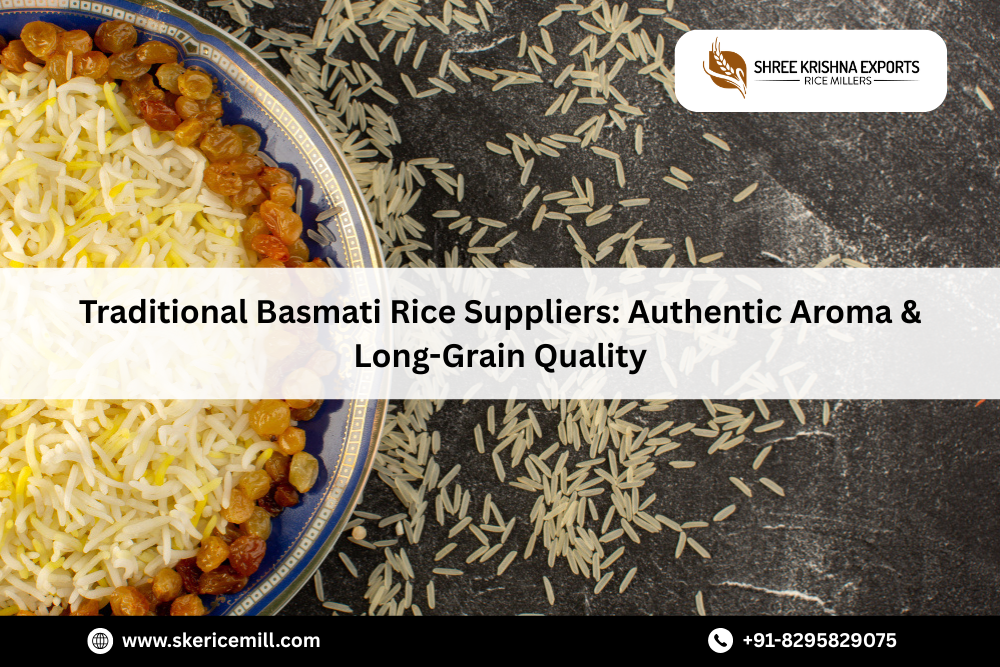
Basmati rice is famous for its unique smell, light texture and long thin grains. It is often referred to as the “Queen of Rice”, traditional basmati rice is cherished in global cuisine, particularly in India and Middle Eastern recipe. With the rising demand for high quality rice Shree Krishna Exports plays the role of trustworthy traditional basmati rice suppliers that has become crucial in preserving authencity, upholding quality standards and providing high quality products to customers around the globe.
What Makes Traditional basmati Rice Unique?
Traditional basmati rice is mainly cultivated in the lush areas of Himalayan foothills, where the climate, soil quality and water condition are just right for growing high quality rice. Unlike hybrid or modern types traditional basmati rice is famous for its natural aging process, which boost its flavor, texture and cooking abilities.
The signature feature of basmati rice is its naturally long grain that expand more when cooked. It stays fluffy, non – sticky and fragrant which makes it perfect for dishes like biryani, pulao and other rice based treats. The rich aroma and unique taste are the factors that set basmati rice apart.
Role of Basmati Rice Supplier
A reliable traditional basmati rice suppliers is the key to keep the true essence of this high-quality grain intact. We at Shree Krishna Export prioritize the sourcing of rice straight from reliable farmers who adhere to age-old farming practices. These suppliers implement strict quality control protocols throughout the stages of harvesting, processing, packaging and distribution.
We make sure the rice is aged adequately before it hits the market, since the aging improves both its fragrance and cooking performance. In a well-maintained storage facilities, advanced milling processes, and clean packaging techniques – are essential steps followed by suppliers to ensure consistency and high product quality.
Quality Standards & Certification
The top suppliers focus on high quality standards to satisfy market needs. As we perform thorough quality inspections to ensure that the rice is clean, whole and free from any contaminants. A numerous suppliers also maintain the food safety certifications and export quality guidelines while providing safe and high-quality products for consumers.
A certification and traceability is gaining more importance in the current food sector. The traditional basmati rice suppliers maintains clear sourcing and quality assurance practices which build trust with buyers and distributors in both local and international markets.
Global Growing Demand for Traditional Basmati Rice
The global popularity of traditional Basmati rice is on the rise, with a growing consumer awareness and demand for genuine and quality food items. International markets appreciate traditional rice for its natural traits and cultural importance. As the demand increases, suppliers are investing into advanced processing technologies while still keeping traditional farming methods to ensure the authenticity of the product.
Moreover, sustainable and ethical sourcing have become a key focus for today’s consumers. Shree Krishna Exports is collaborating closely with farmers to encourage eco-friendly farming practices and fair trade, which helps in promising long-term sustainability and the integrity of the product.
Conclusion
The recognition of traditional Basmati Rice varieties all over the world is growing which can be attributed to the increased awareness among customers for traditional and high-quality food. The global market appreciates traditional varieties for their natural attributes. With increasing demand, suppliers are investing in modern processing technologies while following to traditional farming practices to maintain the product’s authenticity. Shree Krishna Exports maintains sustainable and ethical sourcing which has become a major priority for today’s consumers. The leading traditional basmati rice suppliers are working hand in hand with farmers to promote eco-friendly farming methods and fair trade, ensuring long-term sustainability and product integrity.