
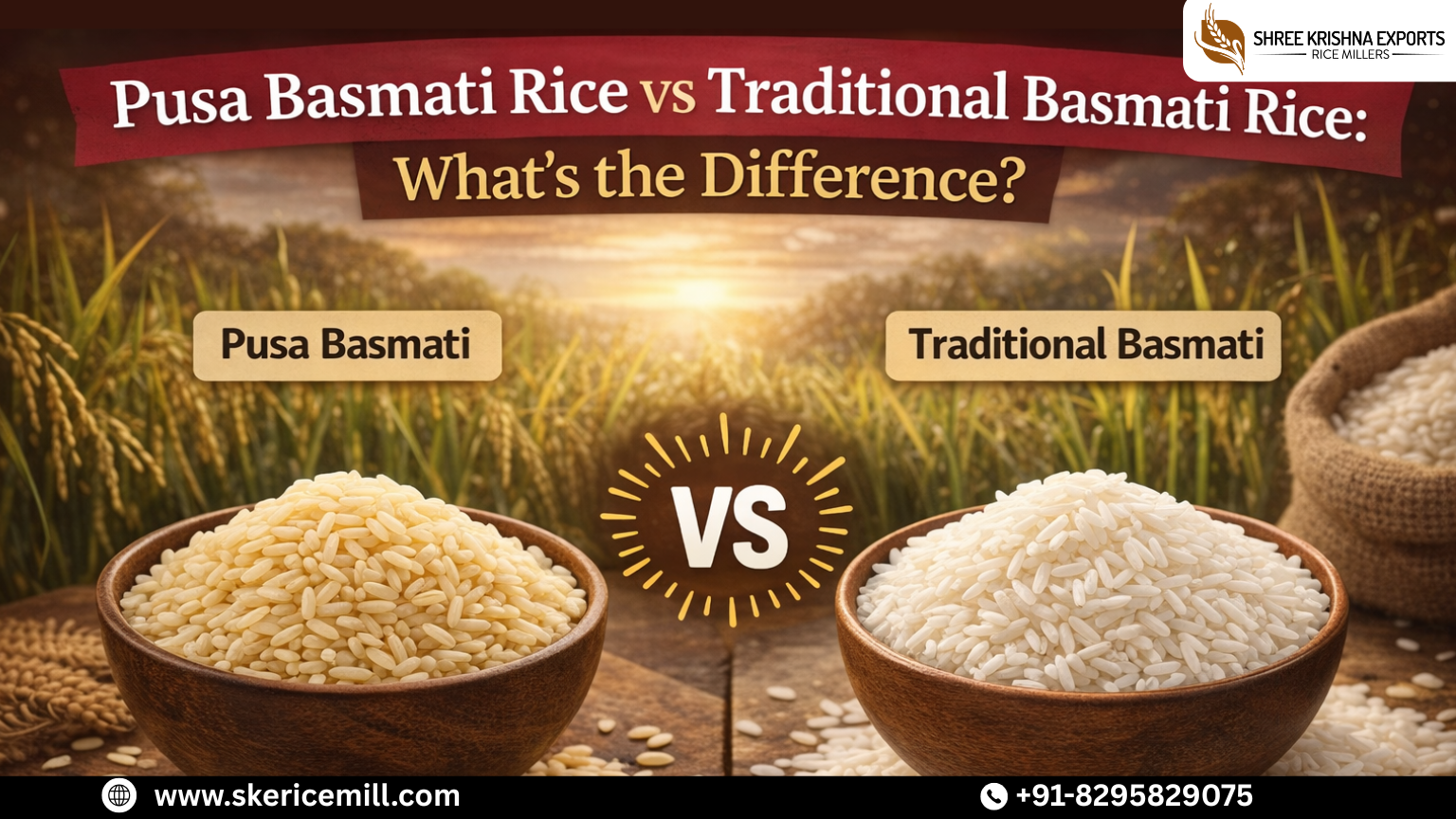
Basmati rice is renowned worldwide for its long rice, amazing aroma, and taste. Basmati rice was first cultivated in the Indian subcontinent. It has been one of the main ingredients of various dishes for centuries. With the passage of time, various agricultural research techniques have been developed, resulting in new kinds of basmati rice, like pusa basmati rice, which has gained much attention from farmers, traders, and consumers. On the other hand, traditional basmati rice suppliers are still serving authentic basmati rice. With Shree Krishna Exports we aware you the distinctions between these two kinds of rice can aid buyers and consumers in selecting the best one according to their requirements.
What is Pusa Basmati Rice?
The Pusa Basmati Rice is a new form of basmati rice that has been specifically developed by agricultural experts at the Indian Agricultural Research Institute, which is also known as the Pusa Institute. The rice has been specifically developed to address the issues that are being faced by farmers with the conventional forms of basmati rice, such as the longer crop duration and the higher chances of pest infection.
The rice has been known for its high yielding capacity, shorter duration, and higher resistance to certain diseases. Despite the fact that it is a hybrid form of rice, the Pusa Basmati Rice still carries the characteristics of the conventional form of basmati rice, such as the longer grains and the delightful smell. When the rice is cooked, the grains are fluffy and easily separable, which makes them suitable for preparing meals such as biryani, pulao, and fried rice. The rice has been grown very effectively, and with the high demand for the rice, the Pusa Basmati Rice has become one of the most popular forms of basmati rice grown in the country today.
What is Traditional Basmati Rice?
The traditional basmati rice varieties are all about the original varieties that have been grown for centuries in the Himalayan foothills. Varieties such as Basmati 370 and other traditional varieties are known for their distinct smell, long and slim grains, and superior cooking qualities.
The traditional sources of Basmati Rice usually source the varieties from regions that provide the best environment and conditions for the growth and development of pure basmati rice. Although traditional basmati rice takes a longer time to mature and gives a lesser yield than the new varieties, the traditional one is popular due to its natural smell and quality. A lot of consumers and chefs go for traditional basmati rice because of its genuine flavor and how it elevates the taste of classic dishes, especially in gourmet and traditional cooking.
What’s it’s the difference between two?
1. Development and Origin: Traditional basmati rice has been grown for hundreds of years and is seen as the authentic type of basmati. On the other hand, Pusa Basmati Rice is a variety created through scientific methods to enhance yield and durability.
2. Crop Duration: Traditional basmati rice varieties require longer crop durations, meaning they spend more time in the fields. On the other hand, has a shorter crop duration, making it wonderful for farming and cultivation since it takes less time for the crops to grow, and harvesting can be done sooner.
3. Yield and Farming Efficiency: Pusa Basmati provides better yields than regular basmati types. This makes it a great choice for farmers aiming to boost their output while keeping that basmati-like quality.
4. Aroma and Taste: The traditional basmati rice variety is renowned for its wonderful aroma and taste. Though the aroma of the Pusa Basmati Rice variety is wonderful, rice enthusiasts still believe that the traditional variety of basmati rice has the upper hand when it comes to aroma and taste.
Conclusion:
Pusa Basmati Rice and Traditional Basmati Rice have their own perks, and both types of rice are wonderful in their own special ways. The perks of the Pusa Basmati Rice variety include the wonderful aspects of the modern farming method, thus making this variety of rice wonderful for farming. The perks of the Traditional Basmati Rice supplier include that they ensure a wonderful taste, wonderful aroma, and wonderful authenticity of the rice. This variety of rice is thus wonderful for rice enthusiasts across the globe. We at Shree Krishna Exports helps you to choose between the two types of rice, i.e., the Pusa Basmati Rice variety and the Traditional Basmati Rice variety, you have to know what you want to do with the rice. Both types of rice are wonderful contributors to the global fascination for basmati rice.